
Chennai-based space start-up Agnikul Cosmos has successfully tested its 3D-printed booster engine, 'Agnite', marking a significant advancement in reducing production complexity and turnaround time for space missions.
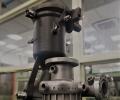
The entire engine, Agnilet, is one piece of hardware from start to finish and has zero assembled parts, reports T E Narasimhan.

For the first time in India, the facility enables 3D printing of aerospace and rocket components up to one metre in height.

The RusBeam 2800 is now India's largest electron-beam wire deposition 3D printer operating under vacuum. The machine was custom-built for India and is operated with software developed by Rosatom.

The spacetech startup is expected to launch the first rocket which can hurl satellites of 250-700 kg into a lower Earth orbit by end-2021.

India is set to take its first steps towards its own human space flight when the uncrewed Gaganyaan mission soars to the skies later this year. Private players in the space sector are also gearing up for launching satellites on home-built rockets.

The maiden mission of Skyroot Aerospace, named 'Prarambh' (the beginning), will carry payloads of two Indian and one foreign customers and is set for launch from the Indian Space Research Organisation's launchpad at Sriharikota.

Billionaire and Mahindra Group chairman Anand Mahindra along with top Silicon Valley investors Naval Ravikant and Balaji Srinivasan are backing space tech start-up Agnikul as part of a new funding round. Chennai-based Agnikul said, on Thursday, that it has raised $11 million in Series A funding round led by Mayfield India. It is the largest funding round for a private Indian space technology company in the country. Existing investors pi Ventures, Speciale Invest and Artha Venture Fund also invested in this round.
'We started AgniKul to show that space transportation should be as simple as road transportation.'

Preparations are in the final stages by the Chennai-headquartered space-tech startup Agnikul Cosmos for the maiden launch of India's first-ever private launchpad and the second rocket launch by a private sector player.

'What we have done is a symbol of new India; that is what a small start-up can do, a few hundreds of people coming together, developing a rocket and launching to space and succeeding at the very first attempt.'

'I feel confident that, if we had to, if there was a problem with the International Space Station, we would get in (the Starliner spacecraft) and we could undock, talk to our team, and figure out the best way to come home'
While participation of start-ups in the space sector has largely been minimal so far, their involvement will be key towards building India's very own aerospace companies such as Maxar, Elon Musk's SpaceX and Rocket Labs, according to experts.

The lead scientist on the project, which was launched by NASA, is also the youngest at 18. Meet the boy from Tamil Nadu who is already working on his next mission.
